
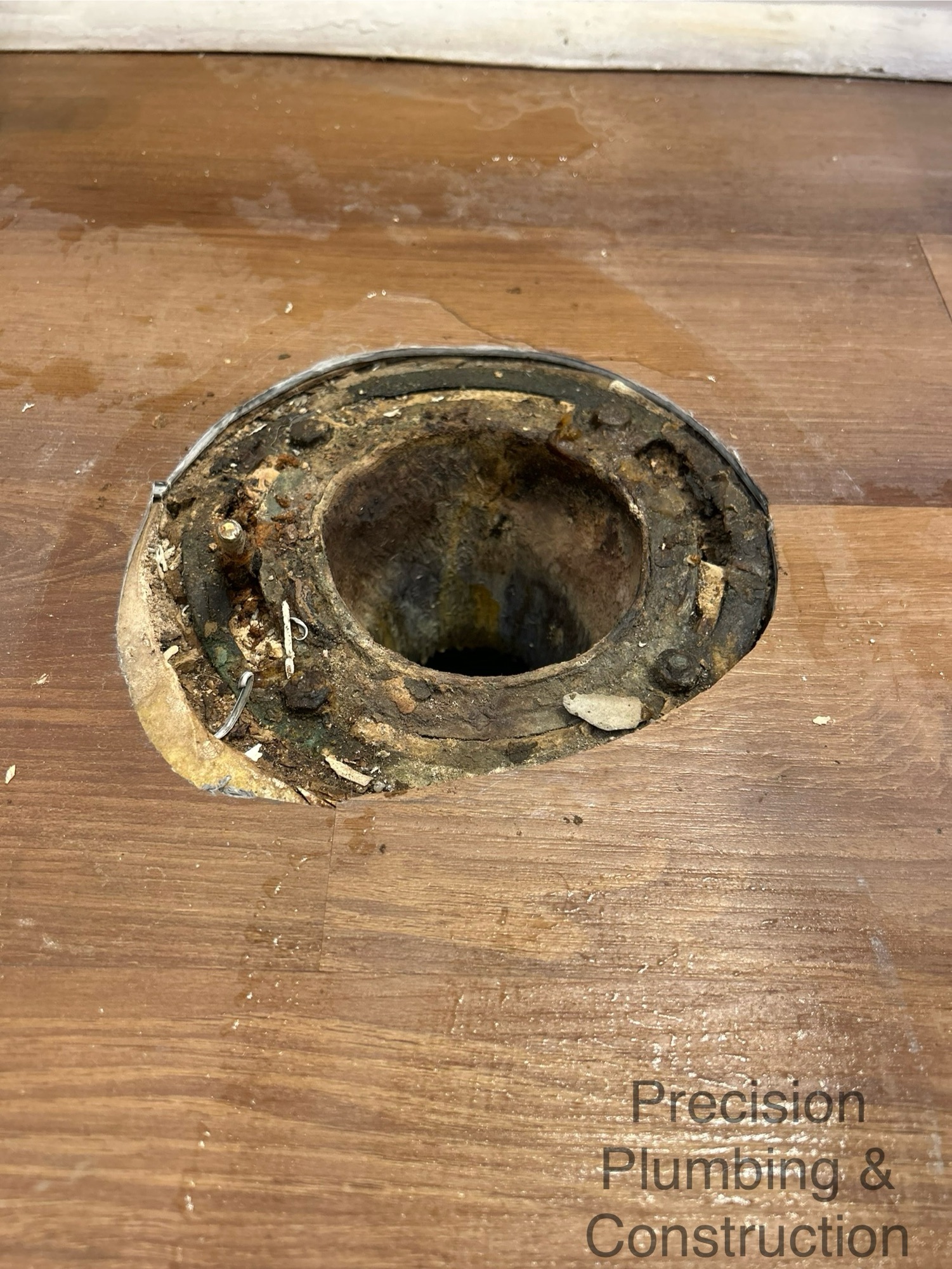
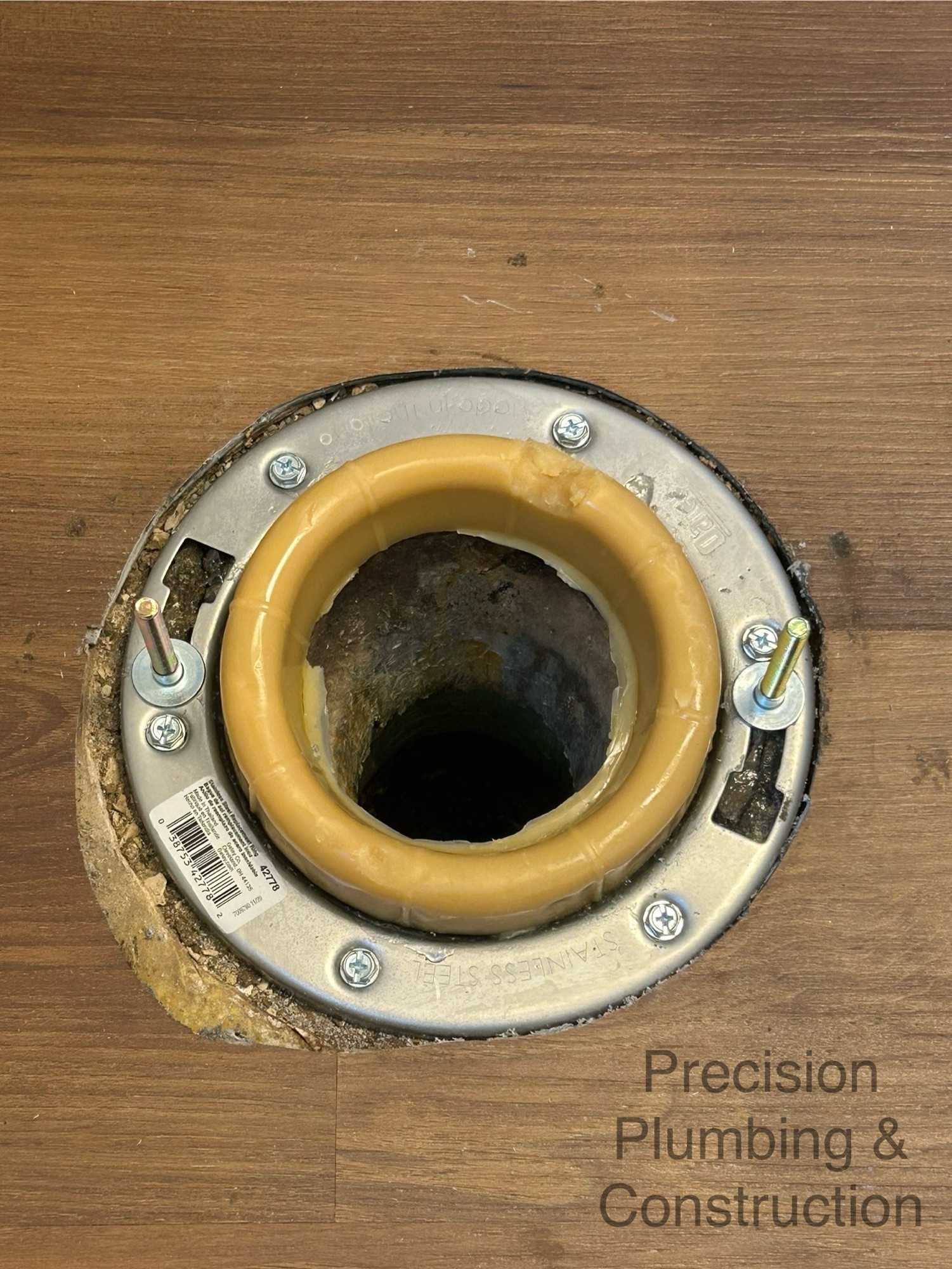
If you’re dealing with a wobbly toilet or water pooling at its base, the problem might be a damaged toilet flange. A toilet flange, also called a closet flange, is a vital part of your bathroom plumbing system. Over time, wear and tear, corrosion, or improper installation can lead to problems requiring immediate attention.
What Is a Toilet Flange, and Why Is It Important?
A toilet flange is a circular fitting that connects the toilet to the drainpipe and secures it to the floor. Typically made from PVC, cast iron, or stainless steel, the flange also works with a wax ring to create a watertight seal that prevents leaks and odors.
Ignoring a damaged flange can lead to costly repairs, so addressing issues promptly is essential.
Signs You Need to Repair a Toilet Flange
Before diving into repairs, it’s crucial to confirm that the flange is the root cause of your problem. Look out for these common signs:
• Water Leaks: Water pooling around the base of your toilet.
• Toilet Movement: A wobbly or rocking toilet when in use.
• Foul Odors: Persistent sewage smells coming from the toilet area.
• Unusual Noises: Gurgling or hissing sounds when flushing.
Toilet Flange Repair vs. Replacement: When to Decide
Sometimes, repairing the flange isn’t enough. Consider replacing it if:
• The flange is severely cracked or corroded.
• The bolts won’t secure the toilet properly.
• The flange is misaligned with the drainpipe.
Conclusion
Repairing a toilet flange is a cost-effective way to fix leaks, stabilize your toilet, and prevent unpleasant odors in your bathroom.
For severe flange issues or if you’re unsure about the repair process, contact us to ensure the job is done right.
 Precision Plumbing & Construction
Leave a comment