
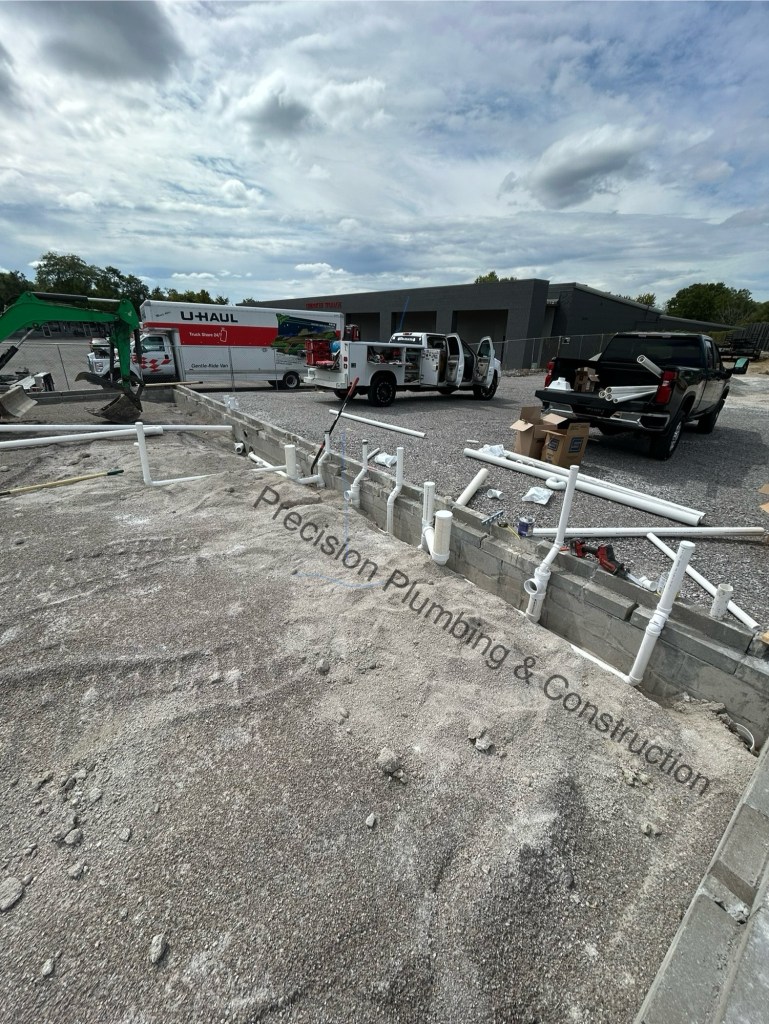
Benefits of PVC for Underground Plumbing:
Durability: PVC is resistant to corrosion, rust, and chemical reactions, making it ideal for long-term use underground.
Lightweight: Easier to handle and install compared to metal pipes, reducing labor and transportation costs.
Non-toxic: PVC is safe for potable water systems as it does not leach harmful chemicals.
Smooth Interior: Minimizes friction, ensuring efficient water flow and reducing the likelihood of clogs.
Cost-Effective: PVC is less expensive than other materials like copper or cast iron.
Common Applications:
Water Distribution: PVC pipes are often used for cold-water supply lines.
Drainage Systems: They effectively handle wastewater and stormwater drainage.
Sewer Lines: PVC is a standard material for transporting sewage due to its resistance to root intrusion and decay.
Installation Considerations:
Trench Depth and Bedding: Pipes should be installed at a depth that protects them from physical damage and freezing. A layer of sand or fine gravel is typically used for bedding to support and cushion the pipes.
Pipe Connections: PVC pipes are joined using solvent cement, ensuring watertight and durable seals.
Proper Slope: A consistent slope is required for drainage and sewer pipes to ensure efficient gravity flow.
UV Protection: While PVC is durable, it can degrade when exposed to UV light for prolonged periods. Pipes stored or installed above ground should be shielded.
Limitations:
Temperature Sensitivity: PVC becomes brittle in freezing conditions and softens at very high temperatures, making it unsuitable for hot-water systems.
Cracking Under Heavy Loads: Without proper backfill or support, PVC pipes can crack under heavy loads or shifting soil.
PVC underground plumbing is a reliable and efficient choice for many applications, offering long-lasting performance when properly installed and maintained.
 Precision Plumbing & Construction
Leave a comment